Posts

Showing posts with the label FAQ's

6 Tips For Coping With Dental Anxiety

Image
New Year's Resolution: Go to the dentist If you are like most people, you read that statement and your anxiety level starts to rise. If this is you, there are things that can help. Here are a few suggestions and tips that I give my patients to help calm their nerves before and during an appointment. Breathe. This may seem obvious, but it isn't when you are in a state of panic. Take slow, deep breaths and focus on your breathing. When your mind is on breathing, it isn't on your appointment. Sometimes it helps to visualize yourself in a "happy place." That happy place may be sipping margaritas on a beach somewhere, or surrounded by family and friends in front of your grandma's fireplace. Wherever and whatever it is for you, we encourage the daydream while you are in your appointment. Know what sets you off. It may be the sound of the drill or just the feeling of dental instruments on your teeth. Talk about it with your dentist whatever it might be. The...

Is Fluoride Good or Bad?

Image
Fluoride.  One of the heavily debated topics of dentistry.  I have read a lot of information on both sides of the story. I'll start out by saying from the research I've done and the evidence I've seen as a dentist I am pro-fluoride.  As with most things fluoride is useful in moderation. (For studies and more information on fluoride click here .) Even water can be “toxic” in high enough doses. High levels of fluoride can cause dental or skeletal fluorosis. Dental fluorosis occurs from very high levels of fluoride as a child and results in mottling (spotting) of the teeth (and no cavities). (Click  here for more information on fluorosis.)  My patients that grow up in areas with high fluoride exposure often have NO cavities into their 20's, 30's and 40's. Fluoride is  found naturally in most water sources. The amount and concentration of naturally occurring fluoride in water is due to different types of soils and rocks found around a water source. Flu...

3 Ways to Care for Your Toothbrush

Image
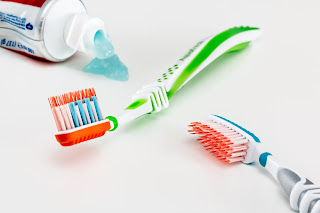
The holiday season starts with Halloween and sugar and candy galore. Then comes Thanksgiving with baked confectioneries and other good foods. This continues through the end of the year and into the New Year. We all love it, but by the end of it, our toothbrushes may be getting a little tired. (Remember to brush AT LEAST twice per day for two minutes and after snacks or meals especially ones containing all those yummy sugars!) Here are a few ways to take care of your toothbrush during it's busiest season: If your toothbrush looks like this it may be time to replace it! Store your toothbrush in the open air. Toothbrushes like to be thoroughly rinsed with water after being in your mouth and they don't like to be encased where they can't dry out after use. They also like their space - stand them upright and don't let them touch other toothbrushes. By storing your toothbrush this way you are minimizing the amount of bacteria on your toothbrush for your next clean...

Whitening Options

Image
Have you ever looked at your teeth and thought, “Man, I wish they were whiter”? Or maybe you’ve even picked up some whitening strips from the store to try, only to figure out that they don’t actually work as well as you had been hoping. Well, there are some solutions you can try. There are quite a few ways to whiten your teeth, but I have seen the best results with these two options: In-Office Whitening : This gives you the quickest results, but can be sensitive and varies in the amount of whitening that is achieved.  Usually this is 1-2 hours you spend in the dentist chair as the doctor and assistant apply a high concentration of whitening gel to your teeth in multiple, small segments of time. The results are fast (relatively speaking) and long-lasting provided you don’t eat or drink a lot of staining foods. Because of the limited predictability with this option it is used more as a quick fix before an event or for individuals that aren't motivated to do the treatment ...

How Often Are X-Rays Really Necessary?

Image
You are at your semi-annual check-up with your dentist and everything is going great until that dreaded little word pops up: "X-rays." Nobody likes getting them, they are uncomfortable and if you have a bad gag reflex, well, you know how that one ends! There is also the concern with radiation and the risks associated with that. Is it really necessary to take X-rays and how often should you be getting them? The ADA states, " How often X-rays should be taken depends on your present oral health, your age, your risk for disease, and any signs and symptoms of oral disease." As a rule of thumb, in my office I typically recommend adults take X-rays of their back teeth (Bitewings or BWX) once per year and once every 5 years X-rays should be taken of all their teeth (Full Mouth or FMX/Panoramic or Pano). If you have a tooth that is causing pain, or have had a change in your mouth since the last time you had X-rays taken, then I also recommend getting an updated X-ray of ...

Should I be afraid of mercury poisoning if I have metal fillings?

Image
Metal (also known as amalgam) fillings are a topic that is hotly debated. The debate stems from the fact that metal fillings contain mercury.  As a member of the American Dental Association (ADA) I tend to trust that they are guiding us with a foundation of science and evidence. The ADA still supports the placement of amalgam fillings and has found no health risks from having them placed in your teeth. The mercury is locked into the filling. I no longer place amalgam fillings because the composite fillings are a long lasting solution and they look much nicer. The older amalgam fillings tend to cause teeth to fracture and break after several decades. While there is not enough long term evidence to confirm this will not happen with composite fillings, it will likely be either the same or better.  I still have amalgam fillings in my mouth and I plan to leave them there until a problem arises, but as that happens I plan to replace them with composite. This is the same r...

How Does Pregnancy Affect My Dental Health?

Image
Pregnancy can be an exciting time. Along with the changes in your body, your mouth may also experience some new and possibly not so exciting changes. It is important to recognize if these changes happen so that you and your mouth can stay healthy. One change you may experience while pregnant is bleeding and sensitive gums when you brush or floss. This is typically due to inflammation in your gums because of hormonal changes. This condition is known as pregnancy gingivitis and is a precursor to more serious periodontal  disease. Luckily, pregnancy gingivitis can be treated effectively with regular dental cleanings. Your dentist may suggest extra cleanings based on severity. Believe it or not, your teeth may also be more vulnerable to cavities . Morning sickness and diet changes contribute to this. Make sure to practice good hygiene at home to help prevent tooth decay. Brush twice per day for two minutes and floss once a day. If morning sickness is an issue or if brushing sets...

Why are my teeth sensitive?

Image
Happy Independence Day! Nothing says summer more than celebrating our freedom with fireworks and ice cream! For those of you who just cringed at that sentence, it may be because the thought of having something cold hit your teeth sends preliminary phantom pains into the nerves of your teeth. If that's the case, you probably have sensitive teeth. There are a few different reasons why you might have sensitive teeth, but the good news is you can treat it!  Possible Causes: Cavities Gum Recession (Exposed Roots) Worn Enamel Fractured Teeth The treatment depends on the cause, so it is important to discuss with your dentist your sensitivity issues. The fix may be as easy as switching toothpaste! When worn enamel is the culprit, using a toothpaste targeted towards sensitivity can help with symptoms. I personally recommend Sensodyne brand. Sensitive toothpastes work because they contain potassium nitrate which calms your tooth's nerves and help...

Do I Really Need to Floss My Teeth?

Image
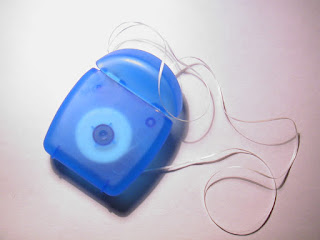
An in-depth look at: Flossing. Is it really necessary? Flossing isn’t fun. It hurts your fingers, it's hard to get it between your back teeth, teeth can be tight together, fillings can cut floss, etc etc. I’ve heard it all. Besides the difficulties sometimes associated with flossing, it takes time, it doesn’t make things feel any cleaner, it can hurt, and the immediate benefit can be difficult to visualize. So, what does it do? Flossing in simple terms disrupts bacteria. It takes a colony of bacteria that’s forming in between your teeth and dismantles it. It removes some plaque from in between your teeth, but mostly it stirs up the bacteria that lives there and destroys their progress. After a dental cleaning your mouth immediately begins the process of building back that plaque and tartar that was just removed. Plaque forms on the surface of the tooth, saliva deposits minerals onto the tooth and, if left long enough, that becomes tartar. Tartar or calculus is a c...

Toothbrushes: Electric versus Standard

Image
Is an electric toothbrush better than a regular bristle brush? This really depends how good you are with your brushing technique, but even someone brushing correctly should notice less plaque with a good electric toothbrush. A Consumer Report published August 28, 2015 states, " Compared with manual toothbrushes, electrics reduced dental plaque 21 percent more and gingivitis (i.e., inflammation of the gums) 11 percent more after three months of use." As far as electric toothbrushes go, I like Philips Sonicare Flexcare and Oral-B Genius. There are lots of comparisons out there for Sonicare verses Oral-B, I don't intend to reinvent the wheel with a new study, but if you would like to look at the differences between each here are some links to reports that have compared them: http://www.bestelectrictoothbrushlab.com/oral-b-vs-sonicare-comparison/ http://www.bestelectrictoothbrushlist.com/ https://www.reviews.com/best-electric-toothbrush/ Note that the fi...

What's the worst thing for my teeth?

Image
Taking good care of your teeth is important. Brushing and flossing are a must, but what if you brush twice a day for two minutes and floss everyday and STILL are getting cavities? If that is the case, it may be time to look at your diet. Start by looking at your sugar intake. The worst kind of sugar (for your teeth) is whatever is going to have consistent exposure to them. Soda and sticky candies are usually the worst because they are typically sipped throughout the day or they stick to your teeth. They are destructive to your tooth's enamel. The enamel of your tooth is important because it is the hard exterior that protects the softer inside of your tooth that surrounds the nerve. When sugars are either left on your teeth or are constantly exposed to your teeth, they weaken your enamel and the sugar combined with bacteria that is found in your mouth start to eat away at your tooth causing decay. Sugar is delicious, and I am just as guilty as the next of having a "...

How often should I brush and floss?

Image
Brushing your teeth and flossing are no-brainers to dental professionals, but to a lot of people they can be hard habits to form. Whether it's the daunting time commitment or simply just forgetting, starting and keeping these healthy habits can be tricky. If motivation is lacking, it is important to know that these practices, though simple, are actually the most important things you can do for the health of your mouth. The  Journal of Dental Research   study in October 2016 made it clear there is a direct correlation between how frequently you brush and the number of cavities you get. The more you brush, typically, the less cavities you will form. Brushing and especially flossing will also help you to prevent gum disease. So, how often should you brush to keep your teeth happy and healthy? A standard recommendation is to brush twice per day and floss once per day. All mouths are different and some may need a little more TLC. Try to brush for at least two minutes....

4 Causes of Bad Breath

Image
We've all had it. Whether it's first thing in the morning or surfaces after eating onions on a hot dog, halitosis (bad breath) plagues us all at one point or another. What is the cause and how do I get rid of it? There are many different reasons you may have bad breath, I will list four here. Bacteria: Bacteria naturally are found in your mouth. They eat when you eat. When bits of leftover lunch linger, the  smor gas bord begins for the bacteria, leaving a foul odor. The solution is simple: brush and floss your teeth. If you've done those things and your bad breath persists, it may be an indication of gum disease. In that case, you should talk with your dentist.   Food: Besides feeding that bacteria in your mouth, food also has it's own stench that could be the culprit for your bad breath. Foods like onions, garlic, or sauerkraut often tend to have lingering effects until they are out of your system. Mouthwash and gums can mask the smell temporarily. Me...

Which type of toothpaste is best?

Image
This is a question that I get quite frequently from my patients. The type of toothpaste that I recommend will vary based on the needs of that patient. One factor to take into consideration is sensitivity. If you have sensitive teeth I recommend Sensodyne. I have seen the best results for sensitivity with their paste. There are several types of Sensodyne, all of which are equally great. For more information on Sensodyne products go to  https://us.sensodyne.com/ . Another factor to be aware of is the advertised "whitening" toothpaste. Whitening toothpastes tend to be much more abrasive but do not “whiten” teeth as much as they “scrape” teeth. They can even cause some sensitivity and damage. I would avoid using whitening toothpastes and stick to other means for whitening. If you have questions about whitening your teeth, please contact our office for options or leave a comment below. The last factor I look for when recommending toothpaste is whether or not it conta...